
Islands Reborn Potato Salad Farm Layouts and Automation Guide
An Islands Reborn potato salad farm automates crop harvesting, washing, and processing to turn raw potatoes and tomatoes into cooked food for coin profit. Players build vertical totem layers or horizontal walking paths to feed food processors continuously.
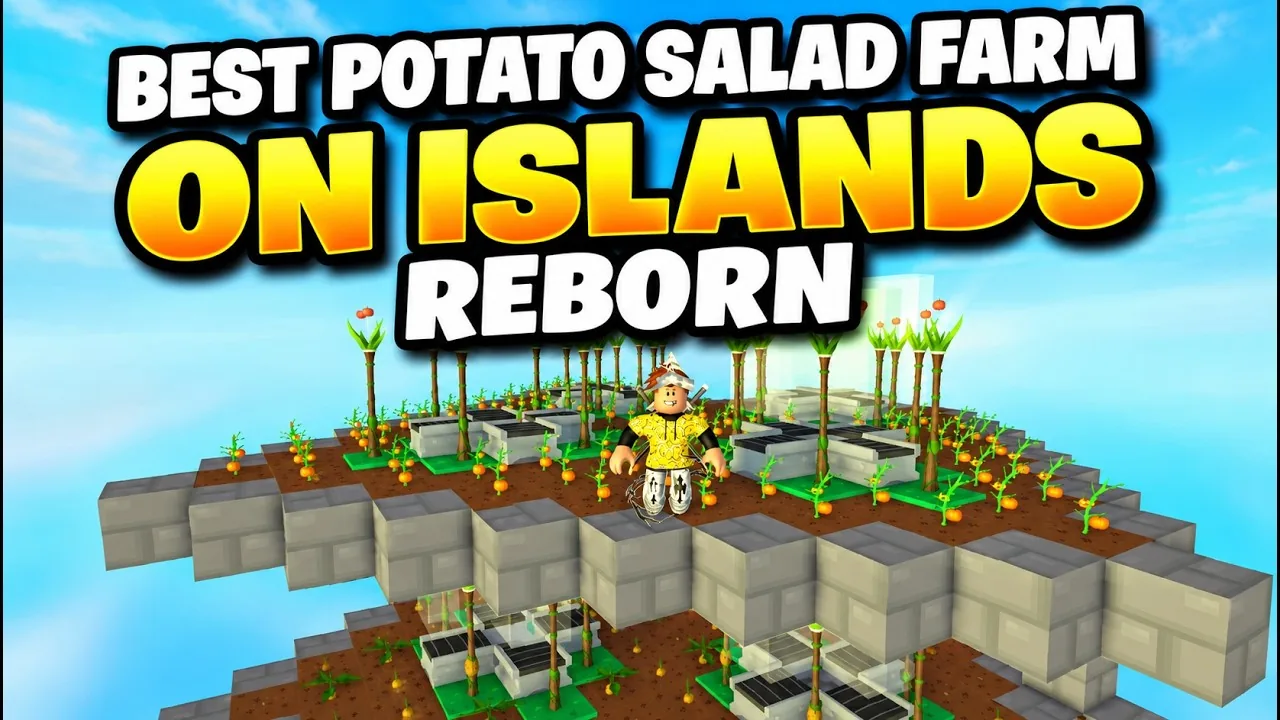
An Islands Reborn potato salad farm automates crop harvesting, washing, and processing to turn raw potatoes and tomatoes into cooked food for coin profit. Players build vertical totem layers or horizontal walking paths to feed food processors continuously.
Production Chain and Equipment Requirements
In Islands Reborn, a fan recreation of classic 2020–2021 Islands by !Project Reborn, potato salad serves as a primary food production project. The item sells for roughly 600 coins during peak prices and requires four raw crops per craft, yielding approximately 150 coins in crop value.
The complete assembly line requires specific farming and industrial machinery:
- Farmland tiles plowed with a wooden or iron plow.
- Potato seeds and tomato seeds.
- Crop totems to harvest plants automatically, or an open walking path for manual harvesting.
- Conveyor belts to move harvested goods into processing machinery.
- Washing stations powered by coal totems to clean dirty crops.
- Food processors set to the potato salad recipe.
- Storage chests placed at the output end to hold finished food.
Balancing raw inputs keeps the machinery running without jamming. Tomatoes and potatoes must both enter the cooking setup. If an island produces only potatoes, food processors stall once tomato supplies run dry. As outlined in the editorial ranking of best crops, potatoes serve as the volume crop while tomatoes provide the secondary input needed to craft each bowl.
Vertical Totem Farm Construction
Vertical totem towers maximize crop collection on a compact island footprint. By stacking farm levels directly above one another, gravity drops harvested items down a central chute toward the processing floor.
Wait, ensure no backticks at all!
A single layer uses a three-block-wide perimeter. Builders map out the perimeter using stone bricks or building blocks, then line the edges with glass blocks. Glass barriers prevent falling tomatoes and potatoes from catching on edges or tumbling off the island. Each layer uses 16 conveyor belts oriented inward toward the drop opening, with four belts facing each side of the central drop chute.
Once the perimeter and conveyors are set, the remaining interior grass is plowed and planted. A standard single layer holds roughly 118 to 120 seeds. Players place crop totems directly adjacent to the plowed rows. Because the recipe demands more potatoes than tomatoes, builders typically construct one tomato layer for every two or three potato layers. Alternatively, players place basic fertilizer—crafted in a composter using three fish for three fertilizer units—on planted crops to accelerate growth without building extra physical tiers.
At the base of the chute, items drop onto a conveyor system that feeds into washers. Builders place two coal totems alongside the washing stations to maintain an uninterrupted fuel supply. The clean produce then routes directly into food processors configured to craft potato salad, which finally output into wooden or iron chests. A 10-layer to 11-layer tower produces roughly 10 million coins worth of produce over five hours of continuous operation.
Alternative Farm Layouts
Players deploy different structural configurations depending on their available budget, totem counts, and automation goals.
| Layout Approach | Best Use Case | Resource Commitment |
|---|---|---|
| Vertical Totem Tower | Compact islands seeking passive output with minimal horizontal space | 16 conveyors and 120 seeds per layer, plus glass blocks and drop chutes |
| Wide Single-Floor Totem Grid | Islands with high coin budgets prioritizing rapid conveyor throughput | 44 potato totems, 200 seeds, and dual washing stations across a 21-block run |
| Border-to-Border Walking Path | Low-budget setups using third-party macros instead of totems | 600 blocks of plowed dirt, stone turning markers, and an external input script |
The wide single-floor totem grid uses an elongated 21-block conveyor run bordered by stone bricks and glass walls. This layout relies on 44 potato totems spaced every two blocks. While demanding a steep upfront coin investment for totems, it feeds two washing stations and two processors simultaneously. Builders must monitor drop rates on this layout, as dense crop clusters can trigger item despawns if conveyors fail to clear items quickly.
The border-to-border walking layout eliminates totem costs entirely by utilizing automated character movement. The path extends 300 blocks from island spawn to the world border, then loops 600 blocks across the opposite border using stone blocks as navigation bumpers. A complete round trip takes seven minutes at base walking speed. Because potatoes require 6 minutes and 15 seconds to fully mature, crops finish growing right as the character loops back to the start. Running this macro produces roughly 15,000 potatoes per hour, yielding up to 54 million coins in daily value when supported by a 3:1 operational ratio of potatoes to tomatoes.
Managing Output and Storage Bottlenecks
A high-yield crop farm design requires adequate processing and storage downstream. Increasing crop layers without expanding processing machinery causes produce to back up along conveyors, leading to item despawns before crops reach the wash cycle.
When expanding an automated setup to pursue a first million coins, pair every four to five crop layers with dedicated washing stations and food processors. Route washed produce across split conveyor lines if a single processor cannot keep up with input volume.
Position chests at the end of the line in a linked series so finished potato salad empties into secondary containers when the primary chest fills up. Keeping storage routes open allows players to monitor production flow and collect finished stock for player trading or money making sales without dismantling working machinery.
Next step
Badges
Track the official Roblox badges available in Islands Reborn and inspect the listed catalog milestones for your profile.